Many mystery writers enjoy putting real-life people into their stories so they can torture and kill them. Ex-spouses are a favorite target, as are hateful former bosses. The authors who go after them tell their audiences gleefully how much zest that adds to the writing process, and how much more lively it makes their books.
So, early on in my writing career, I decided to give it a try. Why not? I could think of two people I've known who seemed irremediably despicable, and I thought one of them might fit into the story I was then working on. He was lazy, mean-spirited, insincere, a bully and a liar. I figured he'd earned a little fictional what-for.
But then an odd thing happened. My story development ground to a halt, and - very unusual for me - I found myself trying to avoid writing. It was clearly on this character's account. He was sucking all the life out of my story, trying to push the plot in a direction favorable to him, never mind what the story wanted or needed. Very shortly, I decided this approach was not going to work for me. "Get out of my book, jerk," I barked. "You've pissed me off enough in the real world; I must have been crazy to let you into my book." So out he went, and the story promptly resumed its proper flow. My relationship with this guy had been close enough and sufficiently longstanding that his bad qualities had overwhelmed my capacity to see - or imagine - any other side of him.
It works better for me to start with people I don't know well, and about whom I have mixed feelings. That allows the characters to grow into rounded human beings, rather than stereotypes or comic-strip personas. Dr. Colin Sanford, in A Perilous Conception, is the result of such a process. His prototype was the most breathtaking example of a doctor who thought he was God I've ever encountered. Not an admirable trait, but over the years, since I wasn't close to him personally, I could watch him go through god-awful contortions to maintain his distorted self-image and overblown self-regard, and feel some sympathy for him. I was able to be an interested observer, trying to figure out just what did make Sammy run. And that gave Dr. Sanford plenty of space to develop into his own person. In the end, the only attributes that remained of his prototype were the monster ego and short stature.
Dr. Sanford's prototype has been dead a good while now, and you know what? I miss the crazy bastard. I'm not at all sure he's inspired his last character in one of my books.
Showing posts with label characters. Show all posts
Showing posts with label characters. Show all posts
Wednesday, December 14, 2011


Wednesday, November 2, 2011
Characters At The Antiques Show
I spent this past weekend at the triannual Palmer-Wirfs Antiques and Collectables Show at the Portland Expo Center. Years ago, my wife and I rented a booth at Expo as a way to get my mind out of medicine for a couple of days. But now I'm a gimpy-backed writer, and my wife and I are on the other side of the counter, walking slowly from booth to booth, visiting with our old dealer-friends, and making the occasional purchase. And while we go along, I keep my eyes and ears open for more than stuff to buy.
Antiques shows are great for generating characters for works of fiction. Not that I try to lift anyone whole from real life; rather, I keep alert for a specific gesture, a bit of body language, or a spoken line that might launch the actor into a story-in-progress, or set off a string of ideas that generates its own plot. Writing teachers like to toss out material of just this sort, and ask their students to construct stories around them. Want to try a few from my weekend's eavesdropping?
1. A couple approach a display case which contains a small Royal Doulton Toby Jug, clearly of Winston Churchill. "Look," says the man. "W. C. Fields." His wife shakes her head. "No, dear, that's not W. C. Fields. It looks just exactly like Alfred Hitchcock." The husband scowls, then points. "Lookit that cee-gar he's holdin'. Hitchcock didn't smoke cee-gars. It's W. C. Fields."
2. A customer walks up to a dealer whose booth is chockablock with antique hardware, and holds out a hand full of small brass parts. "Would you take 52 dollars for these?" In rapid succession, confusion, amazement, then amusement sweep over the dealer's face. "Well, yes, yes I would," he says. "Actually, I'd be real glad to. 'Cause those pieces only add up to thirty-one dollars."
3. Customer: "What's the best you can do on this teapot?"
Dealer: "Well, let's see...I've got it marked 75. 65's the very best I can do." Customer: "Would you take 50?"
You fill in the dealer's reply, and go from there. Who just might end up dead?
Wednesday, July 27, 2011
Literary Sunsets
Readers tell me they think the single most important aspect of a book is the ending. A woman at a Left Coast Crime Convention said, "If the author doesn't get the ending just right, it doesn't matter how good the rest of the book was. It's still ruined for me."
So I work hard at my endings. No exaggeration to say I rewrite them fifty, seventy-five, a hundred times. I may change the whole thing, or just one word. I may reinstate an earlier version, then go back to a different earlier version. I move phrases and sentences around. Square One and I get to know each other very well.
The moral and ethical questions in my upcoming book, A PERILOUS CONCEPTION, are complex, and I struggled to bring the action to a...no, to the proper close. I've never put more effort into the final chapter of a book. As I worked late one afternoon, adding, deleting, revising, I glanced out the window into the sunset. It had been a typical Seattle January day, cloudy, drizzly, damp. In a word, bleak. I was anticipating one of those typical January sunsets, where the sun, absent all day, would go down without notice, leaving us to the gathering darkness. Like the last page of a Patricia Highsmith novel.
But just as the sun approached the horizon, it broke through the clouds and lit the sky, forming a magnificent pattern of brilliant orange and lustrous salmon-pink over ever-shifting streaks of gray. That brief blaze seemed to redeem the whole dreary day. Much more impressive, even, than those sunsets in July, when the flaming sun suddenly drops out of a cloudless sky to vanish behind the Olympic Mountains. All's well that ends well. Like the final number of a stage musical.
A low-note Highsmith ending wouldn't do, I thought. Not for A PERILOUS CONCEPTION, and probably not for any book I'd write. But neither would a stage-musical finale ring true for this story. My protagonist had done seriously wrong (if at least partially for good reasons), and he couldn't march, smiling, out of the novel. There would be sunshine at the end, but it would need to be filtered through carefully-laid out cloud cover, just so, such that when readers would close the back cover of the book, they'd smile, and say, "Yeah."
I think I finally got it right. I hope I did.
Wednesday, March 30, 2011
How Do You Think Up Names For Your Characters?

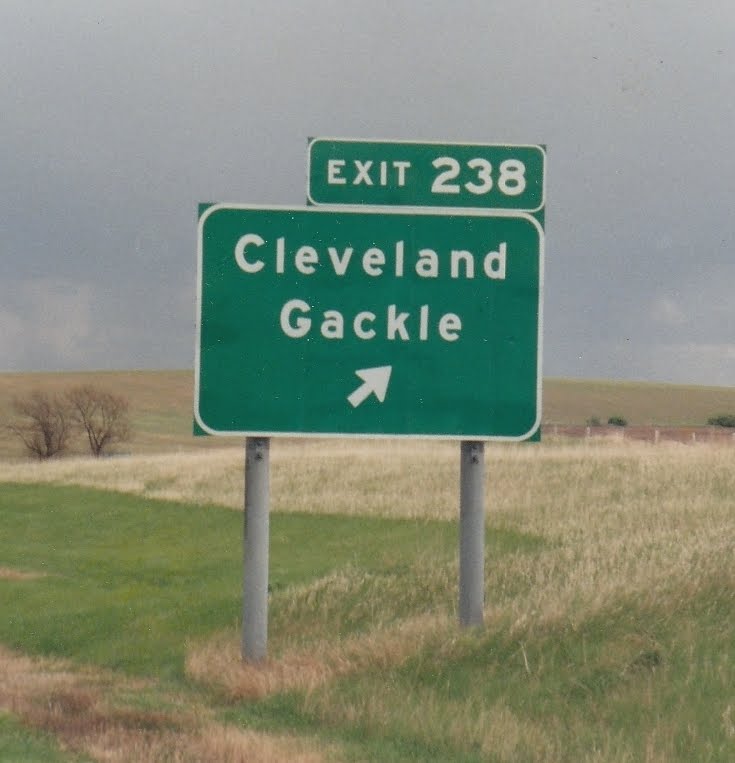
Roadside signs have been great sources of names for characters in my books. Many of these signs have been along freeways, bearing names of two nearby cities or towns. A surprising number are reasonable people-names, often with just that little twist that makes a character stand out. I scribble them onto a page in my pocket notebook, and wait for characters to claim them.
Some years back, on my way from Malice Domestic to the Mystery Lovers Bookstore Festival in Oakmont, PA, I noticed a sign telling me I was approaching Irwin McKeesport. It took a while, but Irwin finally made the jump into fiction as "Iggy the Key," a locksmith and detective's sidekick in my current project, A PERILOUS CONCEPTION (due out from Poisoned Pen Press this coming December). Can you picture him?
The second sign that launched a character in STB was a faded painted ad, I'd guess from the 1930s, on a brick building beside the Alaskan Way Viaduct in Seattle. It advertised a meat company named LoPriore Brothers. The villain in STB was the nastiest person I've ever characterized, and right off, Vincent LoPriore struck me as the perfect name for him. It just seemed to ooze menace. So imagine my surprise one day, after the book came out, when I opened my email and saw a message in my inbox from Vincent LoPriore. I could not bring myself to open it for over an hour, and when I did, I found it was from a man by that name who lived in Pennsylvania. He asked where I'd gotten his name from, so I explained, and told him I hadn't imagined there was anyone anywhere in real life named Vincent LoPriore. Fortunately, he thought it was funny, and said he kinda liked being the bad guy in a murder mystery. So I sent him a signed book, and that was that. Just in case you think you've ever got all bases covered.
Wednesday, March 16, 2011
Out Of The Mouths Of Brats...
I envy authors of children's books. They have at their disposal an endless assortment of characters they can count on to come out with one stupendously outrageous remark or observation after another.
I told her, and asked hers. She replied, then asked me my age.
"I'm four," I said. "How old are you?"
"How old do you think I am?" she said.
I took a minute to look her up and down. "I don't know," I said. "But you look old enough to be dead."
To hear my parents tell it, my stutter never stopped me from opening my mouth when I should've kept it severely shut. My father was a professor at a teachers' college in New Jersey, and one day, before the president and his wife arrived for dinner, he warned me to speak only when spoken to, and then, to be very polite about it. It went well till the president got to talking about the vegetables he'd been growing in his Victory Garden, and bemoaned the fact he'd been unable to grow cucumbers because the soil was too sandy. "No," I piped up. "You can grow cucumbers in sandy soil. Would you like to see?" Then I led him out back, where I'd buried some cucumber seeds in the sandiest soil you'd ever see away from a beach. The patch was covered with vines and vegetables. I compounded my felony by telling the president if he'd water his plants a lot, I was sure he'd get cucumbers too.
I told her, and asked hers. She replied, then asked me my age.
"I'm four," I said. "How old are you?"
"How old do you think I am?" she said.
I took a minute to look her up and down. "I don't know," I said. "But you look old enough to be dead."
Wednesday, September 22, 2010
Alan Chandler, C'est Moi?
People ask me all the time whether one or another character in one of my books is "you." More disconcerting, sometimes they don't ask; they insist a particular character is me. I usually reply to the effect that I never use real people, myself included, as models for fictional characters, that knowledge of a real person's M. O. would limit his or her freedoms of expression and action as a character in a work of fiction.
But I may have to think this through. My sister told me that Alan Chandler, the 17-year-old ragtime pianist in THE RAGTIME FOOL, is "me." I told her Alan is nothing like I was at his age. I couldn't play a note of music. I would never have run off to Missouri to meet an old man from California, to give him an important book I'd bought for a large sum of money from an old woman in Harlem. I'd never have dared to speak to my parents the way Alan spoke to his. And I was amused at Alan's naivete about racial relations in Missouri in 1951. He was unaware that segregation existed outside the deep South. Just clueless.
But a little while ago, Tim Reed, a friend and fellow music box collector, sent me a link, http://www.njn.net/arts/starts/season05-06/2412.html , he thought might interest me, given that I grew up in New Jersey. The video was from NJN, New Jersey Public Television and Radio, and presented the history of Asbury Park, the resort where my family and I spent two weeks every summer throughout the 1950s.
Did I know that the town was founded by a pious Methodist, who wanted to set up a proper resort for proper, well-to-do Christians? Yeah, kind of.
Did I know this target population had "help," who needed to live somewhere, so a Black section of the city was established literally on the other side of the railroad tracks? No.
Did I know that this Black ghetto was a hotbed of popular music, a major venue for the most popular ragtime, blues, and jazz musicians of the day? Nope.
Did I know that even into the 1960s, Asbury Park remained segregated, that Blacks had their own separate (but not equal) beach; the Black beach was adjacent to the sewer outlet? No.
Did I ever notice that I never saw a Black face on the Asbury Park City Beach during the 1950s? No.
Did that ever strike me as odd? No.
All right, then. Isn't it so that people in our dreams are not "somebody else?" Aren't they completely our own creations, put up by our subconscious minds to populate the stories we call dreams?
- Sounds reasonable.
Wouldn't I have loved to talk to my parents the way Alan talked to his?
- Damn right I would've.
Wouldn't I have loved to hop a train to Missouri with the key to a special ragtime event in my book bag?
- Well, yeah. I guess I really would've.
What would I have given to be able to play piano like Alan?
- Chalk one up for the sister.
Sunday, August 24, 2008
Could Gandhi be a murderer?
Not that long ago, a thread on a mystery discussion group caught my attention. It had to do with historicals, and whether or not it was appropriate for a real-life person from the past who had no criminal record to be put into print as a murderer. With very few exceptions, most of the correspondents insisted that this should never be done, that it would be tantamount to a post-mortem smearing of the person's reputation. The majority opinion also held that such a course would make a story unbelievable, and that it would be not only immoral, but bad art as well.
I think a writer's primary obligation, one that overrules all others, is to be true to the story. In writing an historical, I do all I can to present known facts accurately - otherwise, yes, my readers will be distracted, and unable to remain in my fictional world. But I'd have no problem with a story which features a well-known historical figure as a murderer, so long as the motive for the murder is accounted for, and fits comfortably into the history.
Fictional people, no less than inhabitants of the real world, are never one-dimensional, and we all have at least a couple of pretty unsavory characters who sit on the boards of directors in our heads, and determine our thoughts and actions. Suppose that as a young boy, Gandhi witnessed a horrific attack by a British officer on someone he dearly loved. Not only that, the attacker contrived to get off scot-free. Then, when Gandhi reached his mid-teens, he was suddenly and unexpectedly presented with an opportunity to murder the attacker, and without even thinking about it, he did just that. Then, afterward, perhaps over years, as he considered the situation, he came to the realization that his act of revenge had done no one any good, that he'd lessened himself in his own eyes, and that an uncompromising pacifism is the only proper human course to take.
Or, how about an alternate-universe story? Suppose Gandhi's boyhood broodings, followed by his murderous response to the British officer set him on a course of violent opposition to the British occupation of his country? How might the world be different now?
To make it clear to readers what was real in my stories and what was made up, I write afterwords to my historicals. Still, I don't think any fiction writer can smear the reputation of an historical figure. In fact, I suspect that most of the subjects so portrayed might even be entertained by the idea of taking to the stage for a few hours to play murderer.
Subscribe to:
Posts (Atom)
