Different strokes...
Some writers get the jitters after they've finished a book. Galleys are done, review copies out. No going back. Too late to fix the horrible errors that are certainly there. Readers will hate it. Reviewers will shred the book and crucify the author.
My jitters come earlier in the process. As a writer incapable of using an outline for fiction, I begin my stories with a barely-defined character in a murky situation, turn the character loose, and start banging the keyboard. My first drafts are masterpieces of literary malfeasance, the poor characters stumbling this way and that, trying to find their way through the novelistic equivalent of a classic London pea-souper.
As I wrote my first few books, the end of a writing session found my characters and me equally exhausted. But I learned that if I'd just...keep...writing, the characters would gradually reveal and define themselves. Words I couldn't have imagined would be spoken; deeds I couldn't have envisioned would be done, and the book would spring to life. Like a biologist bringing a slide under a microscope into focus. By the time I write "The End" - well, I never actually do write "The End," but to make a point - I feel as though I've told the story I wanted to tell (which is always different from the story I had thought I'd wanted to tell), and that I've done it as well as I could. By the time the book comes out, I'm into the next story*, and any jitters I have are related to the new project.
Sometimes I think about all the other roads my characters might've taken, but didn't. Just like real life. Alternative histories haunt us as we constantly make choices that send us off in particular directions, too bad about the myriad other possibilities that never will be.
To take it a step further, how many other possibilities were there at the moment my parents did what it took to put me into the world? I'm sure there could have been better Larry Karps, and I guess there could have been worse, but for better or worse, here I am. All I can do is keep stumbling forward, and hope that when I've finished the final draft, it will be the best story I could have told.
* There are exceptions to every rule. With A Perilous Conception out for two months now, I'm not yet into my next story. But that's a whole nother story. I hope to be generating my next set of jitters soon.
Showing posts with label character development. Show all posts
Showing posts with label character development. Show all posts
Wednesday, February 8, 2012


Wednesday, December 14, 2011
What A Character
Many mystery writers enjoy putting real-life people into their stories so they can torture and kill them. Ex-spouses are a favorite target, as are hateful former bosses. The authors who go after them tell their audiences gleefully how much zest that adds to the writing process, and how much more lively it makes their books.
So, early on in my writing career, I decided to give it a try. Why not? I could think of two people I've known who seemed irremediably despicable, and I thought one of them might fit into the story I was then working on. He was lazy, mean-spirited, insincere, a bully and a liar. I figured he'd earned a little fictional what-for.
But then an odd thing happened. My story development ground to a halt, and - very unusual for me - I found myself trying to avoid writing. It was clearly on this character's account. He was sucking all the life out of my story, trying to push the plot in a direction favorable to him, never mind what the story wanted or needed. Very shortly, I decided this approach was not going to work for me. "Get out of my book, jerk," I barked. "You've pissed me off enough in the real world; I must have been crazy to let you into my book." So out he went, and the story promptly resumed its proper flow. My relationship with this guy had been close enough and sufficiently longstanding that his bad qualities had overwhelmed my capacity to see - or imagine - any other side of him.
It works better for me to start with people I don't know well, and about whom I have mixed feelings. That allows the characters to grow into rounded human beings, rather than stereotypes or comic-strip personas. Dr. Colin Sanford, in A Perilous Conception, is the result of such a process. His prototype was the most breathtaking example of a doctor who thought he was God I've ever encountered. Not an admirable trait, but over the years, since I wasn't close to him personally, I could watch him go through god-awful contortions to maintain his distorted self-image and overblown self-regard, and feel some sympathy for him. I was able to be an interested observer, trying to figure out just what did make Sammy run. And that gave Dr. Sanford plenty of space to develop into his own person. In the end, the only attributes that remained of his prototype were the monster ego and short stature.
Dr. Sanford's prototype has been dead a good while now, and you know what? I miss the crazy bastard. I'm not at all sure he's inspired his last character in one of my books.
Wednesday, November 2, 2011
Characters At The Antiques Show
I spent this past weekend at the triannual Palmer-Wirfs Antiques and Collectables Show at the Portland Expo Center. Years ago, my wife and I rented a booth at Expo as a way to get my mind out of medicine for a couple of days. But now I'm a gimpy-backed writer, and my wife and I are on the other side of the counter, walking slowly from booth to booth, visiting with our old dealer-friends, and making the occasional purchase. And while we go along, I keep my eyes and ears open for more than stuff to buy.
Antiques shows are great for generating characters for works of fiction. Not that I try to lift anyone whole from real life; rather, I keep alert for a specific gesture, a bit of body language, or a spoken line that might launch the actor into a story-in-progress, or set off a string of ideas that generates its own plot. Writing teachers like to toss out material of just this sort, and ask their students to construct stories around them. Want to try a few from my weekend's eavesdropping?
1. A couple approach a display case which contains a small Royal Doulton Toby Jug, clearly of Winston Churchill. "Look," says the man. "W. C. Fields." His wife shakes her head. "No, dear, that's not W. C. Fields. It looks just exactly like Alfred Hitchcock." The husband scowls, then points. "Lookit that cee-gar he's holdin'. Hitchcock didn't smoke cee-gars. It's W. C. Fields."
2. A customer walks up to a dealer whose booth is chockablock with antique hardware, and holds out a hand full of small brass parts. "Would you take 52 dollars for these?" In rapid succession, confusion, amazement, then amusement sweep over the dealer's face. "Well, yes, yes I would," he says. "Actually, I'd be real glad to. 'Cause those pieces only add up to thirty-one dollars."
3. Customer: "What's the best you can do on this teapot?"
Dealer: "Well, let's see...I've got it marked 75. 65's the very best I can do." Customer: "Would you take 50?"
You fill in the dealer's reply, and go from there. Who just might end up dead?
Wednesday, July 27, 2011
Literary Sunsets
Readers tell me they think the single most important aspect of a book is the ending. A woman at a Left Coast Crime Convention said, "If the author doesn't get the ending just right, it doesn't matter how good the rest of the book was. It's still ruined for me."
So I work hard at my endings. No exaggeration to say I rewrite them fifty, seventy-five, a hundred times. I may change the whole thing, or just one word. I may reinstate an earlier version, then go back to a different earlier version. I move phrases and sentences around. Square One and I get to know each other very well.
The moral and ethical questions in my upcoming book, A PERILOUS CONCEPTION, are complex, and I struggled to bring the action to a...no, to the proper close. I've never put more effort into the final chapter of a book. As I worked late one afternoon, adding, deleting, revising, I glanced out the window into the sunset. It had been a typical Seattle January day, cloudy, drizzly, damp. In a word, bleak. I was anticipating one of those typical January sunsets, where the sun, absent all day, would go down without notice, leaving us to the gathering darkness. Like the last page of a Patricia Highsmith novel.
But just as the sun approached the horizon, it broke through the clouds and lit the sky, forming a magnificent pattern of brilliant orange and lustrous salmon-pink over ever-shifting streaks of gray. That brief blaze seemed to redeem the whole dreary day. Much more impressive, even, than those sunsets in July, when the flaming sun suddenly drops out of a cloudless sky to vanish behind the Olympic Mountains. All's well that ends well. Like the final number of a stage musical.
A low-note Highsmith ending wouldn't do, I thought. Not for A PERILOUS CONCEPTION, and probably not for any book I'd write. But neither would a stage-musical finale ring true for this story. My protagonist had done seriously wrong (if at least partially for good reasons), and he couldn't march, smiling, out of the novel. There would be sunshine at the end, but it would need to be filtered through carefully-laid out cloud cover, just so, such that when readers would close the back cover of the book, they'd smile, and say, "Yeah."
I think I finally got it right. I hope I did.
Wednesday, June 29, 2011
Playing The Name Game
Naming characters is not always easy. You never can be sure you've got it right.
In one of my earlier books, I'd slapped the moniker Dennis onto a character, and the howl out of my editor could have been heard in Zanzibar. "That's a very strong character," she snapped. "A Dennis would be a wimp." I'd never imagined Dennises as being at all wimpish, so I ran the matter past my wife. She shook her head. "I'd think of someone wishy-washy if I read 'Dennis,'" she said. I shrugged, and Dennis became Will, which satisfied both editor and wife.
The biggest snafu I ever got into over a character name came out of SCAMMING THE BIRDMAN, my second mystery novel, a caper. I'd seen a faded painted ad, probably from the '30s, on a brick building beside the Alaskan Way Viaduct here in Seattle. It advertised a meat company named LoPriore brothers. The villain in STB was definitely arch, the nastiest person I've ever invented. Right off, Vincent LoPriore struck me as the perfect name for him. It seemed to ooze menace.
So imagine my surprise one day, after the book came out, when I opened my email and in my inbox saw I had a message from Vincent LoPriore. I could not bring myself to open it until I'd finished dealing with all the other messages, and when I opened the scary email, I found it was from a man named, yes, Vincent LoPriore, who lived in Pennsylvania. Someone had seen a synopsis of my book on the web, and called it to his attention. He asked where I'd gotten the name from, so I told him, said I hoped he wouldn't be upset, and that I hadn't imagined there was any real person anywhere named Vincent LoPriore. Fortunately, he thought the whole thing was very funny, and said he liked being cast as the bad guy in a murder mystery. So I sent him a signed book, and that settled the matter.
Wednesday, March 30, 2011
How Do You Think Up Names For Your Characters?

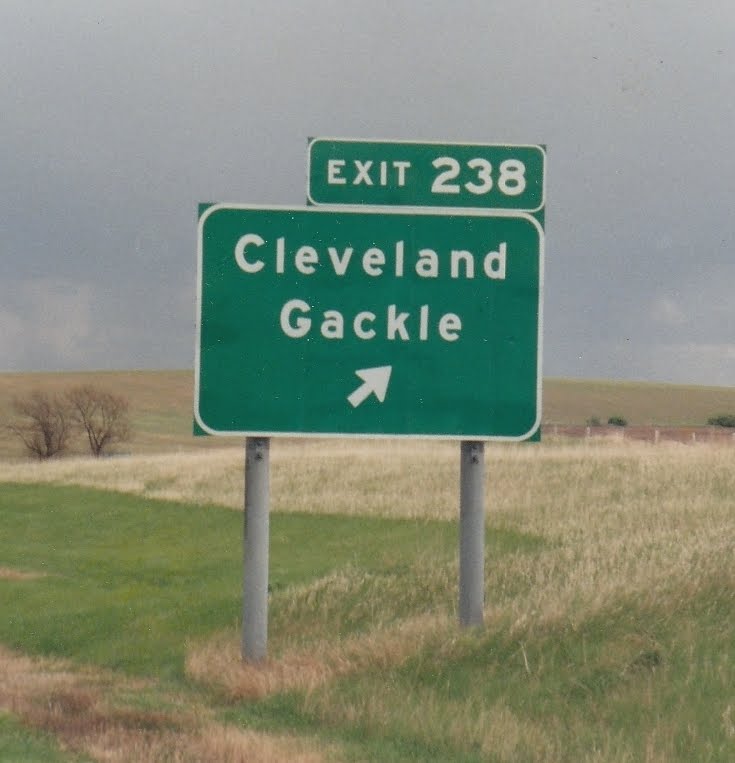
Roadside signs have been great sources of names for characters in my books. Many of these signs have been along freeways, bearing names of two nearby cities or towns. A surprising number are reasonable people-names, often with just that little twist that makes a character stand out. I scribble them onto a page in my pocket notebook, and wait for characters to claim them.
Some years back, on my way from Malice Domestic to the Mystery Lovers Bookstore Festival in Oakmont, PA, I noticed a sign telling me I was approaching Irwin McKeesport. It took a while, but Irwin finally made the jump into fiction as "Iggy the Key," a locksmith and detective's sidekick in my current project, A PERILOUS CONCEPTION (due out from Poisoned Pen Press this coming December). Can you picture him?
The second sign that launched a character in STB was a faded painted ad, I'd guess from the 1930s, on a brick building beside the Alaskan Way Viaduct in Seattle. It advertised a meat company named LoPriore Brothers. The villain in STB was the nastiest person I've ever characterized, and right off, Vincent LoPriore struck me as the perfect name for him. It just seemed to ooze menace. So imagine my surprise one day, after the book came out, when I opened my email and saw a message in my inbox from Vincent LoPriore. I could not bring myself to open it for over an hour, and when I did, I found it was from a man by that name who lived in Pennsylvania. He asked where I'd gotten his name from, so I explained, and told him I hadn't imagined there was anyone anywhere in real life named Vincent LoPriore. Fortunately, he thought it was funny, and said he kinda liked being the bad guy in a murder mystery. So I sent him a signed book, and that was that. Just in case you think you've ever got all bases covered.
Wednesday, March 16, 2011
Out Of The Mouths Of Brats...
I envy authors of children's books. They have at their disposal an endless assortment of characters they can count on to come out with one stupendously outrageous remark or observation after another.
I told her, and asked hers. She replied, then asked me my age.
"I'm four," I said. "How old are you?"
"How old do you think I am?" she said.
I took a minute to look her up and down. "I don't know," I said. "But you look old enough to be dead."
To hear my parents tell it, my stutter never stopped me from opening my mouth when I should've kept it severely shut. My father was a professor at a teachers' college in New Jersey, and one day, before the president and his wife arrived for dinner, he warned me to speak only when spoken to, and then, to be very polite about it. It went well till the president got to talking about the vegetables he'd been growing in his Victory Garden, and bemoaned the fact he'd been unable to grow cucumbers because the soil was too sandy. "No," I piped up. "You can grow cucumbers in sandy soil. Would you like to see?" Then I led him out back, where I'd buried some cucumber seeds in the sandiest soil you'd ever see away from a beach. The patch was covered with vines and vegetables. I compounded my felony by telling the president if he'd water his plants a lot, I was sure he'd get cucumbers too.
I told her, and asked hers. She replied, then asked me my age.
"I'm four," I said. "How old are you?"
"How old do you think I am?" she said.
I took a minute to look her up and down. "I don't know," I said. "But you look old enough to be dead."
Wednesday, September 22, 2010
Alan Chandler, C'est Moi?
People ask me all the time whether one or another character in one of my books is "you." More disconcerting, sometimes they don't ask; they insist a particular character is me. I usually reply to the effect that I never use real people, myself included, as models for fictional characters, that knowledge of a real person's M. O. would limit his or her freedoms of expression and action as a character in a work of fiction.
But I may have to think this through. My sister told me that Alan Chandler, the 17-year-old ragtime pianist in THE RAGTIME FOOL, is "me." I told her Alan is nothing like I was at his age. I couldn't play a note of music. I would never have run off to Missouri to meet an old man from California, to give him an important book I'd bought for a large sum of money from an old woman in Harlem. I'd never have dared to speak to my parents the way Alan spoke to his. And I was amused at Alan's naivete about racial relations in Missouri in 1951. He was unaware that segregation existed outside the deep South. Just clueless.
But a little while ago, Tim Reed, a friend and fellow music box collector, sent me a link, http://www.njn.net/arts/starts/season05-06/2412.html , he thought might interest me, given that I grew up in New Jersey. The video was from NJN, New Jersey Public Television and Radio, and presented the history of Asbury Park, the resort where my family and I spent two weeks every summer throughout the 1950s.
Did I know that the town was founded by a pious Methodist, who wanted to set up a proper resort for proper, well-to-do Christians? Yeah, kind of.
Did I know this target population had "help," who needed to live somewhere, so a Black section of the city was established literally on the other side of the railroad tracks? No.
Did I know that this Black ghetto was a hotbed of popular music, a major venue for the most popular ragtime, blues, and jazz musicians of the day? Nope.
Did I know that even into the 1960s, Asbury Park remained segregated, that Blacks had their own separate (but not equal) beach; the Black beach was adjacent to the sewer outlet? No.
Did I ever notice that I never saw a Black face on the Asbury Park City Beach during the 1950s? No.
Did that ever strike me as odd? No.
All right, then. Isn't it so that people in our dreams are not "somebody else?" Aren't they completely our own creations, put up by our subconscious minds to populate the stories we call dreams?
- Sounds reasonable.
Wouldn't I have loved to talk to my parents the way Alan talked to his?
- Damn right I would've.
Wouldn't I have loved to hop a train to Missouri with the key to a special ragtime event in my book bag?
- Well, yeah. I guess I really would've.
What would I have given to be able to play piano like Alan?
- Chalk one up for the sister.
Wednesday, September 15, 2010
When Characters Act Out Of Character
When a character in a story I'm reading says or does something inconsistent with his or her established beliefs or behavior, I place a bookmark, then watch for the why of that odd statement or action. If it never shows up, I put a big black mark next to the author's name.
In the course of my own work, when a character speaks or acts inconsistently, I also put in a bookmark, to remind myself I need to sort out the oddity. Sometimes, it turns out the character is trying to fool another character. Sometimes, the character's trying to fool him/herself. Sometimes, especially in early drafts, I think I've heard one character speak, when in fact the words came from someone else. Sometimes, I've misunderstood the character. All these possibilities are fine, so long as the variant information is resolved. If a raging white racial bigot takes a little black boy into a confectionary, buys him an ice-cream cone, then sends him on his way with an avuncular pat on the back, it's my job to dig out the reason, and make sure the reader is similarly enlightened before The End.
This necessity also translates out to real-life situations. Taking into account that people do not act out of character without reason may prevent painful misunderstandings.
Many years ago, my friend, Graham Webb, a dealer in antique music boxes in England, called to offer me a very impressive Swiss cylinder box. I told Graham I was very much interested, but would need to sell some of my other music boxes to pay for this one. There was a major swap meet coming up in a week: could he put the box on hold for me until that time? He said he'd be happy to.
The swap meet was successful, and immediately afterward, I called Graham, identified myself, and told him I would in fact like to buy the Nicole Grand Format Overture Box. To my surprise and dismay, he said, in a very cold tone, "I'm sorry. That box is sold."
Understand a hard-core collector's reaction. I was just this far from giving Graham two earsful of anger and indignation when a voice in my mind reminded me how long I'd known him, and how out of character his comment was. There had to be a reason. So I took a deep breath, and said, "Graham, I thought you told me you'd be holding that box for me."
There was a moment of silence, then, "I'm sorry...who did you say this is?"
"Larry," I said. "Larry Karp."
That brought a burst of laughter. "Oh, Larry, hello. I thought you said 'Barry Clark.' These transcontinental phone lines, you know. Just terrible."
From that time forward, I was always 'Barry" to Graham, and we never stopped chuckling over the Great Big Transcontinental Misunderstanding.
Wednesday, July 21, 2010
Writing Characters From Real Life: Better To Know More Or Less?
I just finished reading Nothing To Be Frightened Of, an intelligent, witty musing on death and dying, by the British novelist Julian Barnes. To quote noted children's author Peg Kehret, "He is funny and thought-provoking at the same time, and he does it all with such glorious language." The book is also a memoir, featuring stories about the author's family and friends which influenced and inspired his thanatopsis. And especially in the final pages, Barnes brings to the fore some thoughts about the ways and means of fiction writers.
One of these thoughts is that in basing fictional characters upon real people, an author is wise to not know too much about the source. Barnes tells about a writer-friend who eavesdrops on conversations, but is careful to walk away from the speakers before he's been overexposed, and therefore limited in developing his characters.
At first, I agreed with Barnes. I've been unable to use people I know as characters in my books, because as a seat-of-the-pants writer whose characters and plots develop during the course of the first draft and beyond, knowing all I do about my friends and acquaintances seriously restricts their fictional development. There are things these people simply will not say or do on a computer screen.
For this reason, when I set out to write my history-based ragtime mystery trilogy, I was leery of over-researching people like Scott Joplin; his publisher, John Stark; and Brun Campbell, the Ragtime Kid. But as I went along, I found the more I learned about a particular person in history, the more possibilities opened for characterization and plot. Without having a first-hand take on someone whose life I knew was over, all the information I gleaned from historical documents set itself up as a supporting structure, and the more extended that structure became, the more compatible fiction the character could build upon it as my story developed.
One post-facto example: Nan Bostick, a ragtime pianist/historian/composer from the San Francisco Bay Area, is the great-niece of Charles N. Daniels, a prolific composer and publisher from the Ragtime Era and beyond. After Nan had read The Ragtime Kid, she told me she'd enjoyed the book, and had loved seeing Uncle Charlie as a character. But I wish you'd talked to me about him, she said. At one point, your Uncle Charlie said, 'Goddamn,' but my Uncle Charlie never, ever, used profanity or blasphemy. And during a heat wave in Sedalia, your Uncle Charlie loosened his tie and opened his shirt collar. My Uncle Charlie wouldn't have done that. He used to drive his wife crazy by going fishing in a properly-set up white shirt and tie, and his best wool suit.
Not that I thought my knowledge deficit had done my book mortal harm, but had I known about those quirks, my picture of Uncle Charlie might have been that much more arresting. And beyond that, Uncle Charlie's real-life peculiarities might have made the plot an even richer stew. I have to think, in historical fiction, more background information, used judiciously, is never going to be less.
Sunday, August 23, 2009
Wagner's Ring Cycle and Writing Mystery Novels
I just finished my third viewing of Wagner's Ring Cycle at Seattle Opera. My wife is happy to bask in the glorious music, but I can't help getting involved in the story, and each time I've gone to these performances, I've taken more away.
At every RHEINGOLD, I've privately urged Wotan to give the cursed ring back to the Rhine Maidens, but this time, it occurred to me that were he to do so, the story would have been very much like the one Tolkien wrote (though Tolkien always swore his books were not based upon Wagner's work, but that's another issue). Chase to the bowels of the earth after the ring, have an adventure recovering it from its evil master, overcome your own greed, return it to its proper owner, all's well that ends well. But Wagner's story and characters are far more complex and interesting. Wotan's failure to do right results in no less than the death of the gods, though his subsequent machinations lead in the end to the redemption of the world. Questions regarding love, honor, power, and destiny hold the viewer long after the operas are over.
The lesson for a scribbler of crime novels: don't let your characters take the easier choice. Even if they happen to be gods.
Subscribe to:
Posts (Atom)
