Wednesday, March 30, 2011

How Do You Think Up Names For Your Characters?


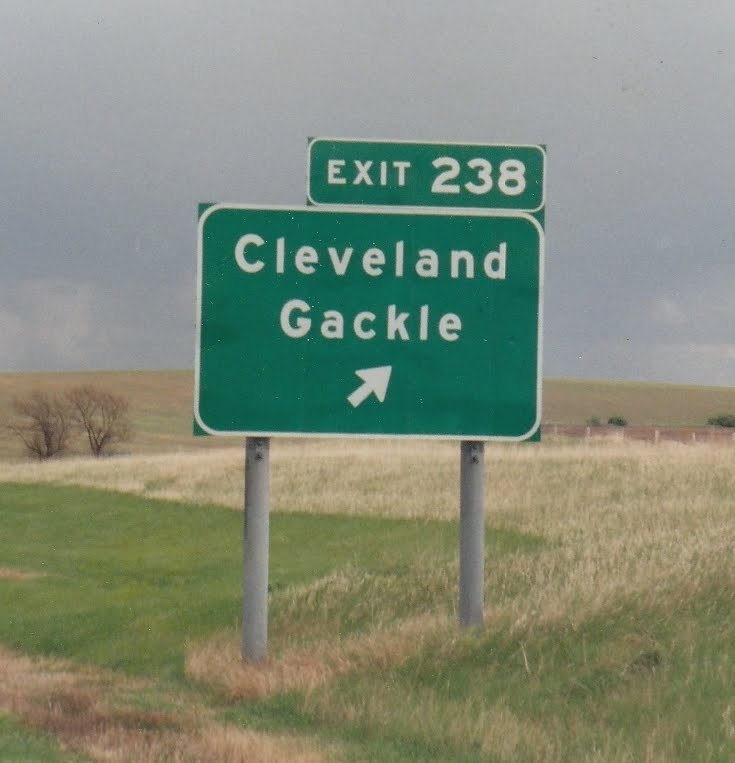
Roadside signs have been great sources of names for characters in my books. Many of these signs have been along freeways, bearing names of two nearby cities or towns. A surprising number are reasonable people-names, often with just that little twist that makes a character stand out. I scribble them onto a page in my pocket notebook, and wait for characters to claim them.

Some years back, on my way from Malice Domestic to the Mystery Lovers Bookstore Festival in Oakmont, PA, I noticed a sign telling me I was approaching Irwin McKeesport. It took a while, but Irwin finally made the jump into fiction as "Iggy the Key," a locksmith and detective's sidekick in my current project, A PERILOUS CONCEPTION (due out from Poisoned Pen Press this coming December). Can you picture him?

My two favorite character names went into the same book, SCAMMING THE BIRDMAN, my second Music Box Mystery. I was driving from Seattle to Chicago on Rt. 94, bored out of my mind, when I saw the sign on the left above this post, and Cleveland Gackle popped into my mind, full-grown, a 70-something weed-smoking lockpicker with bushy white eyebrows and a perpetually-bemused expression. (Rt. 94 in North Dakota was a particularly rich stretch of road. 76 miles east of Cleveland Gackle, I saw the sign on the right above. I still haven't found a character for Buffalo Alice, but I hope to. Somehow, I don't think she smells very good).

The second sign that launched a character in STB was a faded painted ad, I'd guess from the 1930s, on a brick building beside the Alaskan Way Viaduct in Seattle. It advertised a meat company named LoPriore Brothers. The villain in STB was the nastiest person I've ever characterized, and right off, Vincent LoPriore struck me as the perfect name for him. It just seemed to ooze menace. So imagine my surprise one day, after the book came out, when I opened my email and saw a message in my inbox from Vincent LoPriore. I could not bring myself to open it for over an hour, and when I did, I found it was from a man by that name who lived in Pennsylvania. He asked where I'd gotten his name from, so I explained, and told him I hadn't imagined there was anyone anywhere in real life named Vincent LoPriore. Fortunately, he thought it was funny, and said he kinda liked being the bad guy in a murder mystery. So I sent him a signed book, and that was that. Just in case you think you've ever got all bases covered.

Wednesday, March 23, 2011

Mucking Around With Writing Groups

Last Sunday, Charlotte Hinger, a fellow Poisoned Pen Press author, guest-posted on Type M For Murder. Charlotte gave what's probably the minority report on writing groups: she never has belonged to one, likely never will, and doesn't want to muck around with someone else's story.

Her attitude and mine coincide. Some good people have invited me to join writing groups, and although I know excellent writers who credit a great deal of their success to their groups, I've said a firm no, with thanks, to all those invitations. Not only don't I want to muck around with someone else's story-in-progress, I don't want anyone else mucking around with mine.

Outlines work really well for me with nonfiction, but in my fictional work, characters simply will not follow an outline. My finished stories bear little resemblance to what was in my head when I began writing them, and it seems to me that anyone else's input, no matter how intelligent or well-intentioned, might shunt me away from where I was subconsciously headed.

Reading Charlotte's post activated a memory from way back. In his 1984 book, "Flawed Texts and Verbal Icons - Literary Authority in American Fiction," Hershel Parker made repeated references to John Dewey's belief in the "moment-to-moment control over the relationships between what [the author] has already done, what he is about to do, what he actually is doing, and what he knows, at least vaguely, that he must do later on." Dewey further stated that art can not be plotted beforehand, that artists "learn by their work, as they proceed, to see and feel what had not been part of their original plan and purpose." Sounds right to me.

On the other hand, Parker held that there are dangers to the integrity of a literary work in revising it after the author has considered it finished. Did Maxwell Perkins damage Thomas Wolfe's trunkful of pages in the process of helping the author sharpen them into "Look Homeward, Angel?" Apparently, Wolfe thought so. But I always look forward to hearing from Barbara Peters, my editor at Poisoned Pen Press, after I've sent her my supposedly-final manuscript. Barbara has recommended further work on every story of mine, and in every instance, this clearly has improved the book.

I swear, there are as many ways to go about writing a novel as there are novelists. Maybe more.

Wednesday, March 16, 2011

Out Of The Mouths Of Brats...

I envy authors of children's books. They have at their disposal an endless assortment of characters they can count on to come out with one stupendously outrageous remark or observation after another.

To hear my parents tell it, my stutter never stopped me from opening my mouth when I should've kept it severely shut. My father was a professor at a teachers' college in New Jersey, and one day, before the president and his wife arrived for dinner, he warned me to speak only when spoken to, and then, to be very polite about it. It went well till the president got to talking about the vegetables he'd been growing in his Victory Garden, and bemoaned the fact he'd been unable to grow cucumbers because the soil was too sandy. "No," I piped up. "You can grow cucumbers in sandy soil. Would you like to see?" Then I led him out back, where I'd buried some cucumber seeds in the sandiest soil you'd ever see away from a beach. The patch was covered with vines and vegetables. I compounded my felony by telling the president if he'd water his plants a lot, I was sure he'd get cucumbers too.

Then there was the time my family was taking a vacation in Asbury Park. I was minding my business, rocking in a wicker chair on the veranda of our hotel when an elderly woman came up and asked my name.
I told her, and asked hers. She replied, then asked me my age.
"I'm four," I said. "How old are you?"
"How old do you think I am?" she said.
I took a minute to look her up and down. "I don't know," I said. "But you look old enough to be dead."

Wednesday, March 9, 2011

A Novelist's Research Near-Disaster

I closed last week's blog with a research adventure from when I was writing THE RAGTIME KID. Here's one from THE RAGTIME FOOL.

Not a spoiler - the first chapter of TRF reveals the plan of a bunch of Klansmen to blow up a high school in Sedalia, MO during a racially-integrated ceremony to honor Scott Joplin. Since what I knew about explosives would have rattled around inside a watch case, I set out to get information. I learned a good bit about dynamite, but couldn't quite get my head around the specific protocol for its use in bringing down a building.

That summer, I went to Canada to visit my friend Jim, in Sechelt, on BC's Sunshine Coast. We went to lunch with Jim's friend, Ralph, and as I looked around the room, I realized the construction was similar to that of Sedalia's old Hubbard High School. We were sitting in the lower level of a two-story building, the ceiling above us being supported by a large horizontal beam that ran the length of the room. That beam in turn was held in place by two stout vertical wooden beams.

And Ralph was a contractor!

"Tell me something," I said to him. "If you wanted to blow up this building with dynamite, exactly how would you go about it?"

Ralph turned to Jim, who waved aside his concern. "He's a writer," Jim said. "He's probably doing a story. Go ahead and tell him what he wants to know."

So, as Ralph gave me detailed step-by-step directions, I took them down in the little pocket notepad I always carry. When he finished, I thanked him, and told him I'd send him a copy of the book.

Two days later, on my way home, it was only as I was next in line for the customs inspector that I realized I was carrying in my shirt pocket a pad whose first page was titled, "How to blow up Hubbard High School." All of a sudden, air-conditioned car or not, I was sweating profusely. Too late to turn back. It occurred to me that I might tear out the page and swallow it, but I thought no, I'm probably on camera right now. They'd lock me up and pass a tube down one end or up the other. Bad idea.

The inspector waved me forward. Since I'm not a praying man, all I could do was hope. Fortunately, he just asked me a couple of quick questions about purchases, then waved me through. Lesson learned. Next time, information like that gets to my house by mail, snail or e-.

Wednesday, March 2, 2011

San Marino's One Book/One City Festival Is Underway

The programs for San Marino's 2011 One Book/One City Festival have begun. Viewings last week of the movie, "The Sting," featuring Scott Joplin's music, were a great success. Here's what's coming up.
-March 3: Gil Gunderson - Ragtime Piano Performance.
-March 17: Brad Kay - Ragtime Piano Performance.
-March 31: Doug Haise - Ragtime Piano Performance.
-April 14: Crown City Dixieland Band - Ragtime/Dixieland Band Performance.
-April 28: Larry Karp - The author of the ragtime historical mystery trilogy will talk about his books, and about Brun Campbell, the real-life Ragtime Kid, a long-term resident of Venice, CA. After Larry's talk, he'll sign copies of the three books.

All programs start at 7pm, and will be held at the Crowell Public Library, 1890 Huntington Drive, San Marino. Refreshments will be served.


I'd love to hear all those concerts myself - too bad Seattle is so far from San Marino. But I've heard Brad Kay on several occasions, and I can promise a terrific hour of music and talk on March 17. Here's a link to Brad playing "Dew Drop Alley Stomp," and here's another of him playing Joseph's Lamb's first classical ragtime hit, "Sensation," with two other wonderful musicians, Craig Ventresco and Meredith Axelrod.

If you're so inclined, you might also rent the movie, "Scott Joplin," from 1977, starring Billy Dee Williams, with Art Carney as Joplin's publisher, John Stark. It's not the most historically-accurate piece, but the Hollywood take on 1899 Sedalia is pretty good. I rented the film myself when I was researching "The Ragtime Kid." When I went into the video store and told the clerk they were holding a movie for me, he asked, "Whatsa name?" "Scott Joplin," I said. The clerk gave me a truly withering look. "No, man," he drawled. "Not your name. Whatsa name a the movie?"

Wednesday, February 23, 2011

Words, Words, Words. They Run In The Family


SIMON SAYS, "LAW BOOKS AREN'T BORING"

My old man taught remedial reading. When his students challenged his assertion that children as young as four could learn to read, he brought me into the classroom, stood me up in front, and handed me a book. I stammered my way through "Randolph, the Bear Who Said No," then held the book up to the class, pointed at a picture, and told the students, "See. This is Wandolph."

Encouraged...well, pushed by The Old Man, Myra - my wife - and I had our son, Casey, reading long before his fifth birthday as well. By the time Casey was six, his sister, Erin, was three, and had grown tired of having her brother ignore her in favor of books. She told me she wanted to read too, and I should show her how. I was skeptical, but I read through a book for her, tracing the words with my finger, then had her read it with me. Then I asked her to read it alone, which she did flawlessly. I thought she might've been just exercising a good memory, so I picked up an unrelated book, opened it, and told her to read. Which she did, again flawlessly.

The two kids used to go to the neighborhood library, pull books off shelves, and stagger up to the checkout counter, balancing armfuls as high as the tops of their heads. One day, a new librarian told them perhaps they should take just one or two books at a time. The children's librarian, Ms. Goldmanis, overheard, and told the newbie, "Those two can take as many as they'd like. They'll be back in a few days with all their books read."

Now Erin has a son, Simon, seventeen months old. She and husband Peter have been reading to the kid literally since he was born. Thanks to contributions from his grandparents and family friends such as children's author Peg Kehret and Dennis and Linda Ronberg, former owners of Linden Tree Bookstore in Los Altos CA, Simon has a world-class collection of books, many signed by the authors, and he likes to pull them down from the shelf and present them for reading to his parents and grandparents. Sometimes he'll bring a book off Erin's reading pile, and she'll tell him, "This one doesn't have any pictures. But look at all the words! You'll be able to read all these words one day!"

Yesterday, as Erin was at work in her law office, Simon came in, took a book from a shelf, sat, and opened the book. As he turned the pages, Erin realized he was saying, "Words, words, words." What made it even more funny is that the book was a dictionary - a Japanese-American dictionary.

I think the kid's working up to challenge his mother's family record. And apparently, his father's as well. According to Grandma Marge, Simon has five months to learn to read the numbers on license plates.

Wednesday, February 16, 2011

A DOUBLEHEADER: Me And Connie Mack, and Follow This Blog

Having turned in the manuscript for A PERILOUS CONCEPTION, my upcoming mystery novel, people ask what I'm doing now. When I tell them I'm starting on the next book, most of them look like they don't quite get it. One questioner straight-out asked me why. I guess I must have looked like I didn't quite get it, because he added, "You've had ten books published - isn't that enough?"

This week, baseball players began to report for spring training, the annual season of optimism and hope, and in the vehicle of my acquaintance's question, I traveled back in my mind to the spring of 1951, when I was very young and even more impressionable. For the first time in its fifty-year history, the Philadelphia Athletics were going to have a manager not named Connie Mack. During that spring-training session, an east-coast sportswriter wrote a retrospective on Mr. Mack's career, a half-century of some of the highest highs and the lowest lows in the ongoing story of the national pastime. The writer commented to the effect that he'd been asking the elderly manager for some years whether he was ready to retire. But Old Mr. Mack, the reporter wrote, would get a far-away look in his eyes, smile a little, shake his head, and say, "Just one more season."

When Connie Mack finally did throw in the towel at age 87, it was after a dreadful 1950 campaign in which the Athletics lost 102 games and finished dead last in the American League. Probably not the leave-taking the old man had envisioned. But should he have left the dugout after his 1931 AL pennant, walked away on top, and spent those twenty years in uneasy and regretful leisure? As a twelve-year-old kid, I didn't think so. I knew even then that for Connie Mack, baseball was not a pastime. It was his life. I had to admire the guy.

Just one more book.

* * * * *

Would you like to have Larry's weekly blogs delivered to your email inbox? Just click on the FOLLOW button at the top right of the screen, register, and Bob's your uncle.